This morning I participated in a session by David Berque from Depauw University on "Experience the Possibilities of 1-to-1 Computing with Tablet PCs." My first observation is that the title is totally accurate, we actually got to experience using an HP tablet PC. What a difference it makes to have the technology in your hands!
The HP tablets were a slightly older model, but they mostly worked smoothly. My particular model seemed to have a problem with switching the screen direction, but otherwise I really felt like I was getting the whole experience. They had DyKnow software installed on them, and I have to say, the developers of the DyKnow software obviously worked with educators as partners, they thought of everything! I was amazed at the capabilities of the software.
Our session started with David presenting as if he was our teacher in an algebra classroom, and us as the students. We learned some brief facts about binary numbers and were led through an activity with binary numbers. David made sure to emphasize the affordances of the Tablet PCs and at least mention some of the features, which were impressive. Here’s a brief list of the most important items I remember:
- The teacher can control any of the student’s computers whenever he/she wants. Obviously this is a classroom management feature.
- The software allows for imports from other software, which makes the learning curve a bit less for teachers.
- The instructor can collect student responses quickly and easily from the students, allowing for students (and the teacher) to get feedback about the lesson as it is ongoing. This turns the Tablet PC into a classroom response system, which lots of research shows is incredibly useful.
- Lessons are automatically recorded, and each slide of a presentation can be played back by the students (with audio), so that they revisit a lesson if they want. The students also have their screens updated with the information the teacher is presenting, which makes note-taking much easier.
- The software allows for collaboration mode, and group work, which means that pretty much any constructivist learning you want to do is possible.
This software really helped turn the PC into a tool that was much different than what you could do with pencil and paper. All aspects of what the computer can do were built into the software, including but not limited to network readiness and sharing of digital media. Students could potentially log onto the program from home, and participate in the same lesson as their peers in class, or the whole class could be held electronically. There would be a loss of feedback between teacher and student as a result, but with the built in chat room, and the ability to share what is happening on each other’s screens, communication between peers is much more straight forward in this medium than the typical online learning management system would be.
I’m going to collect some information on how much the software costs, because it seems to me that it would run perfectly well on a netbook, or even a Mac (running Parallels). To me, the DyKnow software was the big show, and the fact it was running on a tablet PC was secondary. If you have to choose between the two, this session seemed to suggest that the software was a better bargain.
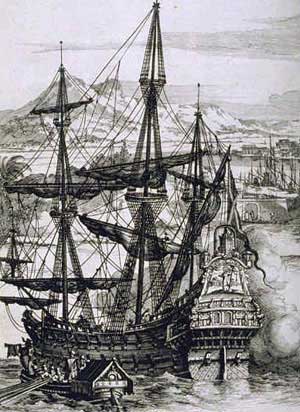 In the 9th grade, our guiding question is, "How as Imperialism affected our society?" and we are looking a specific focus of Central and South America and the colonization of those parts of the world. In Mathematics, my task was, "Determine how much sugar could a galleon carry?" which was relevant because sugar is an example of a trade resource upon which the colonies depended. Here is the task sheet I
 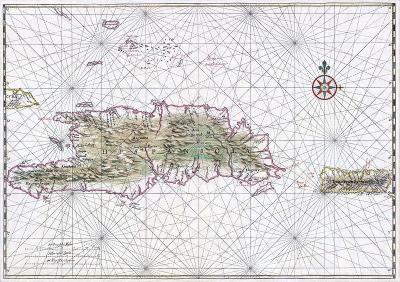 In the 10th grade, our guiding question is, "How do we best get our voice heard? Is it through Science, Math, or Language?" We start by gathering evidence in all three subjects, specifically on the environmental effect of large multinational organization policies can have on small impoverished countries. We complete our week with a trial, in which students will present their scientific or mathematical evidence to their teachers. They will also role-play either French speaking or Spanish speaking people’s of said countries (we originally said that this case was a comparison of the Dominican Republic and Haiti) who have been affected by the multinational organization.