Education ∪ Math ∪ Technology

Author: David Wees (page 64 of 98)

Bad calculations

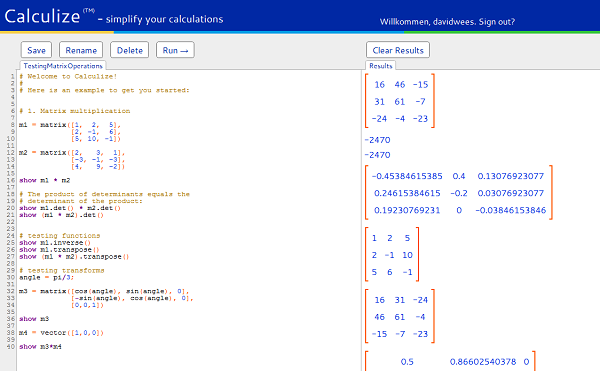
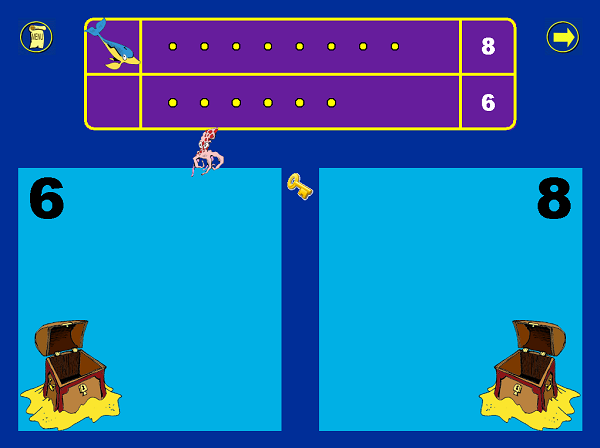
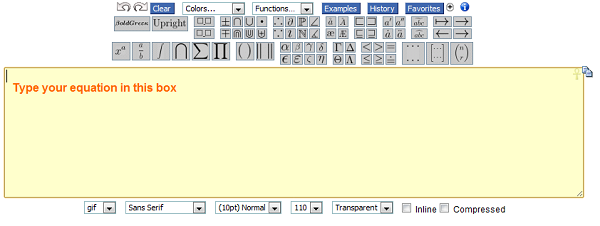
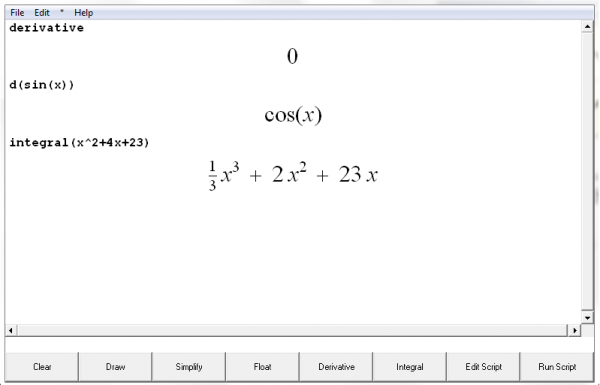
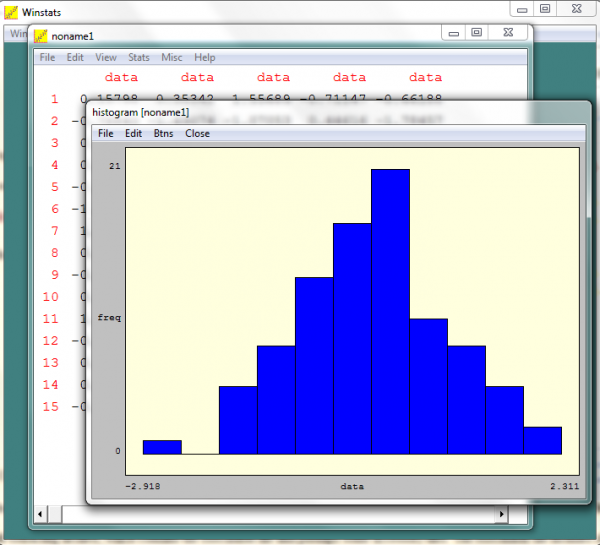
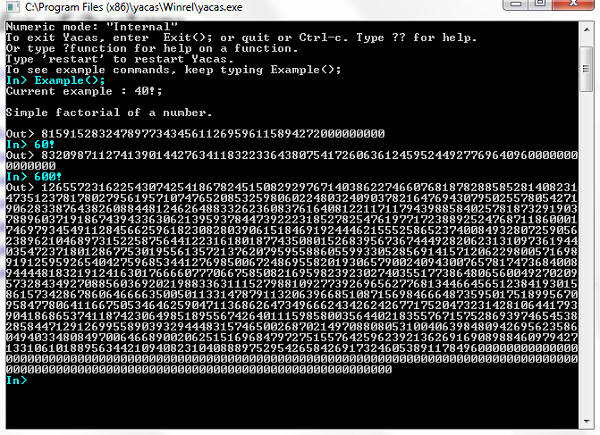
Question: If you didn’t know the procedure for addition or multiplication, and lacked numeracy skills, could you catch the errors in the calculations shown here?

This is what happens when you teach computations instead of reasoning. Anyone who looks at 14 x 5 and gets 25 does not have basic numeracy and estimation skills developed, and quite possibly has never used real objects to do multiplication before. The error is not primarily in the calculations that they are doing but in the system that leads them to trust their calculations more than their common sense and intuition about the problem they are working on. This kind of error happens independently of the tool used. If you don’t believe me that students can make similar computational mistakes using a calculator, ask math teachers how often they see 4/8 = 2 and other similar mistakes.

A mathematics curriculum based on the ability to do computations and not solve problems is flawed in my mind. We should focus on mathematics as a tool, rather than mathematics as a goal.

People change (ps. kids are people)

People change.

Change

(image credit: dhammza)

I’m not talking about the obvious physical characteristics that change about people, but their inner thoughts and feelings, the cognitive abilities that make them sentient. No one is exactly the same their whole lives as no one is immune to the effect of gaining experience and wisdom from life’s experiences. It has been shown time and time again that the assumption that people are static and unchanging is false. People often change in dramatic and unexpected ways.

I have two students this year who have made leaps and bounds in their academic ability, largely because they push themselves much harder this year and generally acting more motivated and energized in class. My colleague at my last school loves to talk about a child who started in 9th grade as one of the least academically able 9th graders and ended up top of his class in Calculus AP by the end of 12th grade.

When I was in public school, I was painfully socially inept and struggled not only to make friends, but even to understand the motivations and social expectations of the people in my life. Now, I’m in an incredibly social profession as a teacher, I’m comfortable presenting to a room full of a hundred people, and I interact with thousands of people in the course of a month. I’ve changed a huge amount.

Not all change is positive growth of course , but we need to recognize that change is not only possible, it is likely. Our educational policies should reflect the ability of people to change.

Is it possible for children in your school to switch tracks? For example, can a child on a less academic path switch to a more academic path and vice versa? Can students choose to switch courses when their needs change? Can they switch what elective courses they take? Do your discipline policies reflect a student who can change, or do they apply penalties using strict criteria which allow for no opportunity for growth on the part of the student? Do you let students know that they are even capable of change?

Most importantly, what opportunities exist in your school to help kids change their own lives?

Open educational resources

Educators, I have some bad news to give you. You aren’t going to get rich. It doesn’t matter how many of your lessons you carefully hoard, or how many great ideas you keep to yourself, none of that is going to make you rich. You will probably never publish your "book" and you aren’t going to get famous.

You could however make a difference. You could give what you’ve got away for free and help make the world a better place. The technology exists to make it relatively easy to share your project ideas, assessments, lesson plans, curriculum, thoughts, whatever you are working on with students. The problem is right now, not enough educators are sharing what they are doing.

The main reason we as educators do not share more of what we do, is that we lack time. We don’t see the value in sharing what we do because it takes effort to upload & share our ideas, and the return is not immediate obvious. Getting that test written, or deciding what you are going to cover for the next week is tedious. To this I say, let your students help you out. Instead of having your students write summaries and rewrite notes from class, have them share the great ideas you come up with collectively with the world. Enable your students to help you. Petition your administration for collaboration time to polish your ideas with your colleagues and then share the result with the world.

Another reason not to share resources is that what we do is fairly specific to our group of students. Many of us customize what we do to the particular group of students we have. To this I say, share the core of what you are doing then, and not all of the details which make it work for your specific case.

Michael Nielsen makes the case in the TED video for Open Science, but in my mind, the same should hold true for education. The resources you make for your classes should be owned by the public, since in the long run, we all benefit. We need to move toward a more open collective experience in education, an Open Education, rather than our current isolated walled garden approach.

The Scientific Method and Education

In the video above, shared by Dan Colman this morning on the Open Culture blog, Richard Feynman makes this powerful statement.

It doesn’t make a difference how beautiful your guess is, it doesn’t make a difference how smart you are, who made the guess, or what his name is, if it disagrees with [the] experiment, it’s wrong. – Richard Feynman

How would we apply this to education?

We should look at what is working and decide our policies based on the evidence. We should be looking at data, which should have a broad spectrum of types (just like scientific data has) and use it to help determine policy. We need to hold true to Feynmann’s process as well, which is to make a guess as to what will work, decide what the consequences of those actions would be, and then find a way to determine if this is true or not.

There are a number of initiatives in education which either lack data to support their implementation, or which have contradictory evidence as to their effectiveness. For example, various influential people have been promoting the idea of merit pay for teachers, for which the evidence is inconclusive. In other words, someone had an interesting guess about how education works (teachers will work harder for the chance at more money) and drew the conclusion that student learning would improve as a result (as measured by one form of assessment, a standardized test), and the results of the experiment have not shown a result one way or the other (but have shown that when you dangle a big enough carrot in front of people, they will cheat to get it).

My guess is that the schools that work the best start with the premise that teachers should have sufficient autonomy and support to master their craft, and someone (parents, school, or teachers) provides the resources (food, clothing, shelter, safety, supplies, technology) for their children to succeed. I predict that in such schools you would see higher engagement in learning from administrators, teachers, students, parents, and the community. 

Who is willing to do an experiment to see if my guess is right?


What should be on a high school exit exam in mathematics?

Personally, I think an exit exam for school (an exam a student needs to graduate from secondary school) is not necessarily the best way to determine if a student has been prepared by their school. That aside, some of sort of assessment of what a student has learned from their school, whatever form that would take, should satisfy an important criterion; that the student is somewhat prepared for the challenges that life will throw at them.

A typical high school exit exam is testing a student’s preparation for one component of life, specifically college academics. It seems obvious to me that this narrow definition of "preparation" doesn’t actually prepare students for the challenges of life. A student could quite easily pass the NY Regent’s exam in mathematics, any of the IB mathematics exams, their SAT, and any number of other standardized exams, and not know a lick about how to apply the mathematics they are learning in school to solving problems they will encounter in life.

While this shouldn’t be the only goal for mathematics education from K to 12, it seems to me to be a minimal goal, and one which at which we are failing quite dramaticly. Some evidence of this failure is seen by our mostly innumerate public who; lack basic literacy of graphs & statistics, are largely mathphobic, do not understand probability (casinos are good evidence for this), and generally only use relatively simplistic mathematics in their day to day life for problem solving. 

There is nothing inherently wrong with teaching how to do a calculation for it’s own sake, or for sharing some of the beauty and power of mathematics, but it should be framed by the notion that our education of mathematics is intended for a greater purpose. If we only focus on the 4 years people spend in college, we do a disservice to the decades of life they have after college.

It’s Spring!

My mom, my son and I went outside today and looked for signs of Spring together.

Signs of spring Signs of spring Signs of spring

(click on the photos to view them in a larger size)

We found flowers blooming, buds and leaves on trees, new plants rising out of the soil, and a nest of baby spiders. My son was very interested in all these signs of spring and followed us all over my mother’s property while we searched for more signs of Spring.

My son has the advantage that he has a grandmother with a house on a small island nestled in a forest and with a nice garden. As I walked around the garden, I felt very fortunate to have the ability to explore nature with my son. In our home in Vancouver, there are signs that Spring is here, but they are harder to find amid the concrete jungle. I can’t imagine what it would be like if your home was less "green" than Vancouver. I rememembered, for example, that in New York City that there were a lot fewer green spaces than in Vancouver.

What do we do for children who do not live in places where the coming of Spring (or even the change of seasons in nature) is obvious? How can we ensure that all children get to experience nature?

More importantly, what do we do for children who live in places like this?

Child in slum in Kampala (Uganda) next to open sewage

image credit: gtzecosan on Flickr

I know that our world is not fair, but it worries me that it is becoming less fair in many ways rather than more fair. I worry that the vision I would like to see for our future, where we all live in a sustainable world, is much different than what some of our leaders envision. When I see our own social services eroding, and less concern for the living conditions of people abroad from our local governments, it makes me worry, and wonder what I can do to work toward a brighter future.


Motivation

Reposted with permission from my school’s monthly magazine, the Imprint.

Stratford Hall is not a school that uses carrots and sticks to get students to perform. Instead, we generally rely on building on students’ intrinsic motivation to learn. Daniel Pink, a researcher in the area of what motivates us all, says (in his book Drive) that when people are working on work “which requires even rudimentary cognitive ability,” they are actually demotivated by reward systems. Instead, Pink suggests, people are motivated strongly by the ability to demonstrate autonomy, mastery, and purpose. You can watch a summary video of his ideas here:

http://wees.it/danielpink

Autonomy

For me, autonomy means that students need to have some choice in what they do. I’ve noticed that my students tend to put more effort into assignments for which they have some opportunity for choice, and the ability to demonstrate their creativity.

For example, we did an assignment at the beginning of Science 8 last year where students had to “use a creative method to help remember the parts and functions of a cell.” Some students wrote haikus, some students did raps, and some students created videos. As the assignment was formative in nature, I never graded the submissions, except to give students descriptive feedback about their work. We shared the work in class. That unit we did a summative assessment on the parts of a cell, and most students achieved a 6 or 7 (note: 7 is the maximum score for an assessment in the International Baccalaureate). What was even more interesting to me was that, about seven months later, one of the students discovered the video of her rap. On her own time, and completely without any push from me, she decided to redo her rap video. She spent another several hours working on her video and then re-shared the new video with the class. Before this exercise, I couldn’t have imagined a student taking a prescriptive assignment and ever giving it another thought.

Mastery

Mastery means that we want to get better at doing things. It’s fun to become an expert at something, which is why so many of our students practice playing music on their own time. They have complete control over their learning, and they can see themselves improving. I think we do this really well. We have lots of opportunities at Stratford Hall for students to find things that interest them and to follow those interests. We have the PYP exhibition in 5th grade, the MYP personal project in the 10th grade, and the extended essay in the IB Diploma, for example. We also have a rich variety of elective subjects, especially considering the size of our school. These elective subjects are crucial for allowing students to follow their passions and develop mastery.

Purpose

Purpose is a key element of motivation as well. In schools, for me, this means that the learning students do has relevance, and that there is an obvious result and effect students can see from what they do. For example, Harry Armstrong in grade 11 is working to help run the MUN club. He gets nothing for this (except possibly a small bonus to his likelihood of being accepted to college because of his extra-curricular activities) and it takes a huge amount of time. We were exchanging emails over the weekend about what we were going to do on Tuesday, and it was clear by the discussions that happened during the day that a lot more emails had been exchanged amongst the students that I hadn’t been included on. Harry does this work for the MUN because he sees that he has an important role to play, and that the activity has purpose. He wants the younger students to get better at debating and to understand how the MUN functions.

More generally, we see purpose in our global outreach. Many of our students work extra hard to help make that program function, and, although I know the excitement of going to a far-away place is the draw for some of them, when they come back from their trips it is interesting to see how many of them continue to work hard for the program. The learning doesn’t stop at the end of the trip; it continues, hopefully, for the rest of their lives.

So if we want students to become more self-directed in their learning, and more motivated to work hard to succeed, we need to find ways to give them autonomy, mastery, and purpose.

Mecha
(Created by a Stratford Hall student in 6th grade)

One way that we do this is through the use of technology. Students are able to practice using technology skills over a number of years, and will master various forms of technology. They are given the opportunity for autonomy through the enormous amount of choice and opportunity to be creative through different technologies. Further, they can see purpose in what they do, given that learning the uses of technology is helping to prepare them for a future outside of our school.

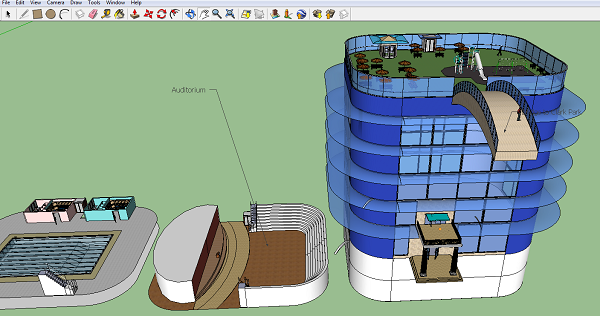
For example, during Arts Week, we had a session on using Google Sketchup to create artwork for video games. Once they had some of the basic skills in place, they were given the instructions, “play with this and see what you can get.” Afterwards, they attended a workshop wherein the CEO of a small special effects company provided some background on what goes into creating special effects for movies, and students could see from the style of artwork he presented that a tool like Google Sketchup could be useful in sketching out ideas for use in movies.

Spaceship
(Created by a Stratford Hall student, 12th grade)

Corner store
(Created by a Stratford Hall student, 12th grade)

There are also some interesting examples of using technology in Photography class, for example, where Mr. Wheeler’s students have no limits to their imagination.

Seahorse
(Created by a Stratford Hall student, 9th grade)

I’d also recommend checking out this excellent video by some of our grade 9 Global Challenges students. http://wees.it/watercrisis

Our words are not enough: It’s time for action

I’m fortunate to work in a school which gets it. We do a lot of the stuff that people on #edchat are describing as innovative, particularly in the area of student leadership and assessment policy. I feel respected every day, and my opinions and thoughts have a real impact on the direction our school goes. I know this is not true for many teachers though, and I hear it through the discussions we have on Twitter. It seems most teachers work in places where they have very little influence on school policy.

We discuss a lot of stuff on Twitter, but given the number of people meeting, and our individual influence, I have often wondered how powerful we could be as an organizing force. I’ve often found #edchat to be a great starter of ideas, but the ideas seem to go nowhere and we often talk in circles without seeing any change. Sometimes #edchat feels like a gigantic echo chamber where we all pretty agree with each other, and find the best ways to share our agreement in 140 characters. 

I don’t want to change #edchat, but I would like to see space for organizing group action we can take, and it seems to me that Twitter would be a valuable tool for doing this. I’ve proposed the #edaction hashtag, where educators can post ideas for action we can take, and then we can meet to decide on actions (and brainstorm future actions) we will take for the week. 

Here are some suggestions of relatively easy actions we can all take:

  1. Talk to a neighbour education and your vision for what it should look like. Listen to their opinion. If you disagree, discuss core beliefs and find out what you agree on.
     
  2. Write a letter to a traditional print newspaper. We might be firm adopters of the digital world, but many people with influence do not read blogs & follow Twitter. We need to spread our message to a different audience.
     
  3. Share ideas about education we have in #edchat with your colleagues at school. You don’t have to become an evangelist for #edchat, but we need to see what our non-Twitter educator colleagues think and ensure that when innovative ideas come out of #edchat that a larger community hears them. We need critical evaluation of our ideas as well, and our colleagues are a great source of criticism, and improvement of our thoughts.

Please post other ideas you have for #edaction in Twitter using the #edaction hashtag. Our objective? Take action to transform education.

ISTE 2011 Board Elections

I’m running for the International Society for Technology in Education General Board elections. Their objective is to promote and support the use of technology in education which is one I support largely because I personally support the appropriate use of technology in schools.

When I saw the board elections coming up, I decided to submit an application and nominate myself to the board. My application was accepted, and I’m now on the ballot for the upcoming elections for the position of the International Representative of ISTE. I’m running because I’d like to see some Canadian representation on the board, and because I want to get more involved in the educational technology community.

People who have strong opinions about educational technology should get involved with advocacy groups like ISTE. It is important that we get involved or we risk letting these organizations disappear, which means that educational policy on the use of technology will end up being shaped solely by business interests.

The opposition for my position is Julie Lindsay, who I think would also make an excellent representative for the International Representative of ISTE. Just make sure you log into the ISTE website (if you are an ISTE member) and vote for either of us before April 11th.


If high jumps were run like standardized tests

Howard Kellogg suggested over on the Edutopia assessment forum that "While the "test" may represent the "bar" we have to clear, it is not the "bar" that must occupy our total attention." I think the analogy of clearing the bar is a good one for a number of reasons.

High Jump Meeting 2008

(image credit:Jeanine Besemer)

Imagine you are back in school at a track meet (which by the way don’t happen anymore in a lot of schools because of budget cuts, safety issues, and a narrow focus on math and reading skills) and you have a high jump set up. The bar for the high jump is initially set so that every student has an opportunity to jump over the bar. Students who cannot jump, for whatever reason, do not participate. Over time, the bar is raised until only a few top students manage to make it over, and eventually a tie occurs, or there is a winner of the competition declared. Every child gets to experience some level of success, although for many children this success will still be a relative success as they will naturally compare their ability. In many cases, students actually choose which events they will compete in, and so not every student will even try the high jump event, prefering to focus on events in which they feel more capable, or have more interest in.

If the high jump was like how we run standardized tests, every child would be expected to be able to jump over the same bar and labelled a failure if they don’t succeed. For some children the bar would be set too low, and they would set lower expectations for themselves in the future. For other children the bar is set too high, and they will label themselves a failure. Many of them would not participate in future competitions simply by dropping out of the track and field event. For some children, the entire exercise would be ridiculous because they couldn’t possibly jump over the bar, no matter where we set it. Further, we would judge schools and teachers based on their ability to make kids jump over the bar, without concern about who they are working with. As an aside, some school districts (like NYC for example) would be using a special rubber bar that they can bend and flex to ensure that the "right" number of kids are able to pass it.