While I’ve had some time off from work, I’ve been designing curriculum. It seems like a good way to keep my skills sharp and create something useful for the greater math community.
I chose to use a Creative Commons license for this curriculum because too many curricula exist that are made more difficult to use by teachers because of their license and format. This results in teachers spending precious planning time coping and pasting, cutting, reformatting, and retyping, when they should ideally be thinking about how to use or adapt a particular resource for their students. These resources will be shared as Google Docs to be both easily accessible on the web and editable by teachers.
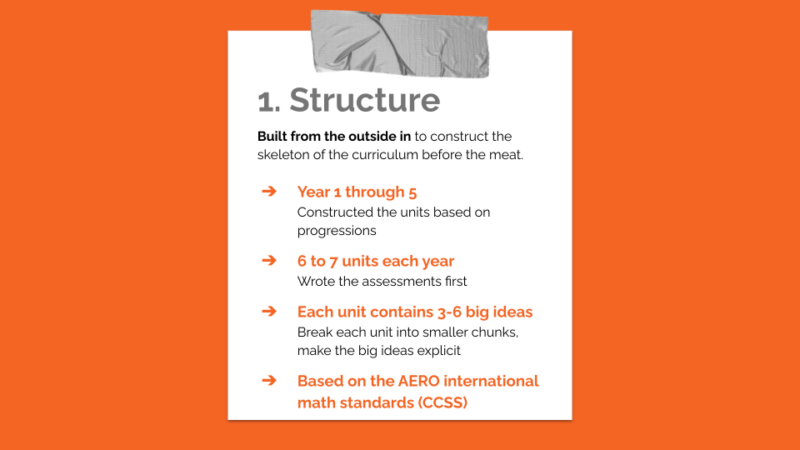
The curriculum is structured as aimed at the IB Middle Years Programme, which is typically five years long and starts in the equivalent of North American 6th grade. I took the AERO International Math Standards (which are VERY similar to the US Common Core) and created units out of them, then broke each unit into 3 to 6 big ideas, each of which should take about a week to teach. Each big idea is then broken into lesson goals, with language taken from the standards meant to be addressed in that unit.
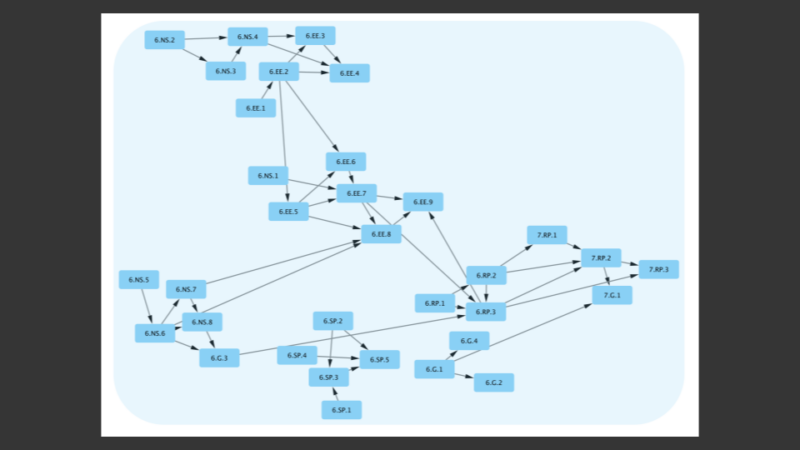
In order to ensure that the content of the units is in the right order, and also to eventually make explicit the connections between units, I created a graph of all of the standards (based largely on the work done by Achieve the Core and the Common Core progressions documents).
Here’s a sample of part of that graph.
As the IB Middle Years Programme is typically followed by the IB Diploma Programme, I constructed the five year progression to include all of the prerequisite topics necessary for success in that programme. This means that what would normally be Grade 6 to Grade 11 (six grades) in North America is compressed into five years. I also opted to use the integrated mathematics approach, since this is what is typical in most MYP international schools and more closely matches the expectations of the IB Diploma Programme.
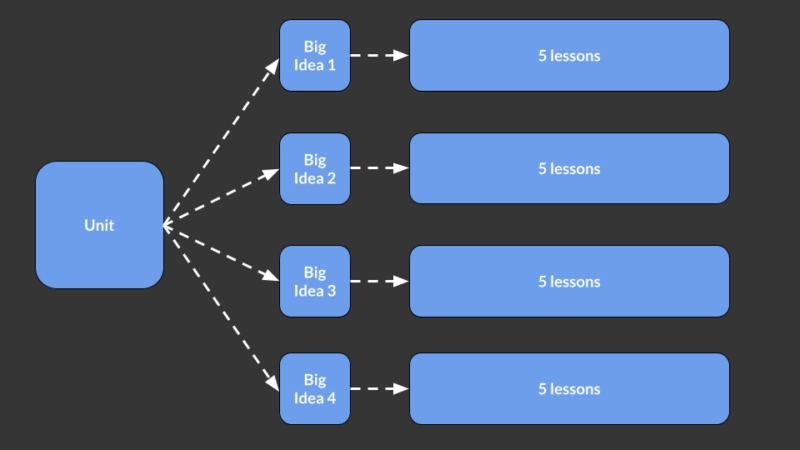
Each unit has multiple big ideas, each big idea has 5 lessons. There are 25 big ideas in a year, and an astute reader will realize this means this curriculum only has 125 lessons a year, which seems like far too few.
There are four reasons for this number of lessons.
- It is much easier for a teacher to add to a curriculum additional resources and to slow down where necessary for students when the curriculum isn’t overly crowded and leaves space for teacher discretion.
- Most international schools, the target demographic for this curriculum, already have a lot going on with “experience weeks”, “personal project days”, etc… that 25 weeks more realistic than a typical 35 week school year.
- It leaves room for assessment to occur outside of the lesson time. Some of the assessments included might take multiple days, teachers might want time for quizzes, etc… and all of these eat away at the time teachers have to teach.
- It leaves time for ongoing revision and review, and building up things students have forgotten from previous years.
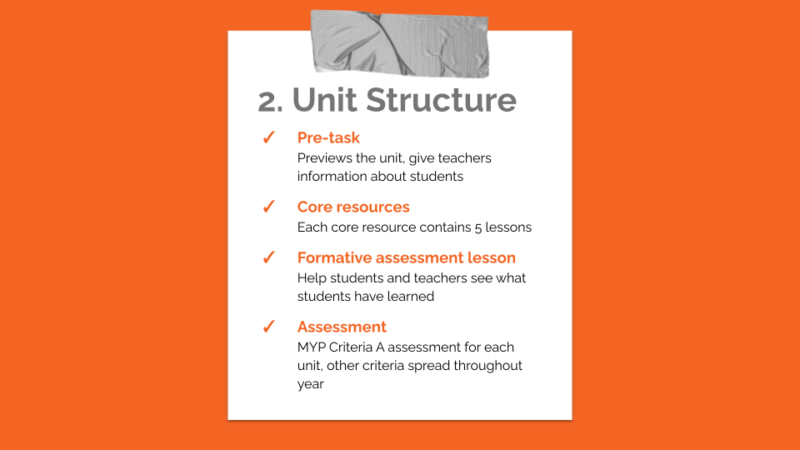
The units also have a unique structure.
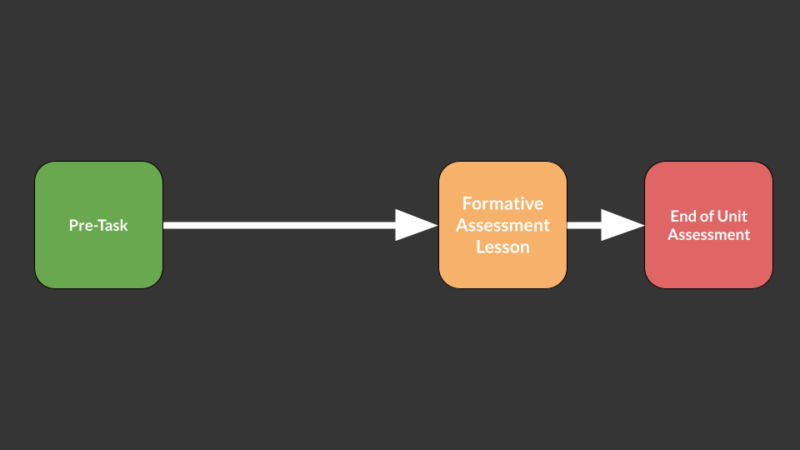
Each unit includes a pre-task, meant to preview the content of the unit for students and provide teachers with information about student readiness for the unit. After the pre-task, each unit contains one core resource for each big idea in the unit. This packages a collection of lessons (with daily goals) targeting a larger idea within the unit. Each unit also contains a formative assessment lesson (almost all of which come from the mathematics assessment project) intended to help students and teachers understand what students have learned from the unit. After the formative assessment lessons, teachers have an opportunity to re-engage or reteach content from the unit, and finally, there is an end of unit assessment. (Eventually, each lesson will have additional cumulative practice included, but these will be written last.)
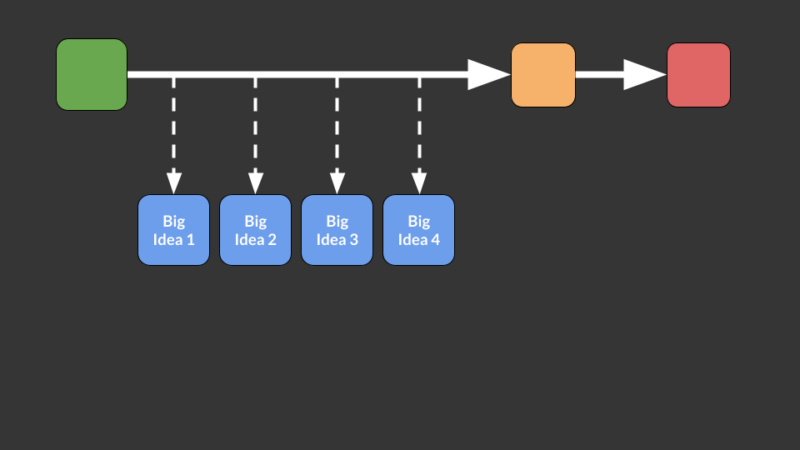
(An aside: The lessons themselves are meant to have some important properties, but that will be the subject of a future post.)
The IB Middle Years Programme (MYP) assesses students on four different criteria.
- Criteria A. Knowing and understanding
- Criteria B. Investigating patterns
- Criteria C. Communicating
- Criteria D. Applying mathematics in real-life contexts
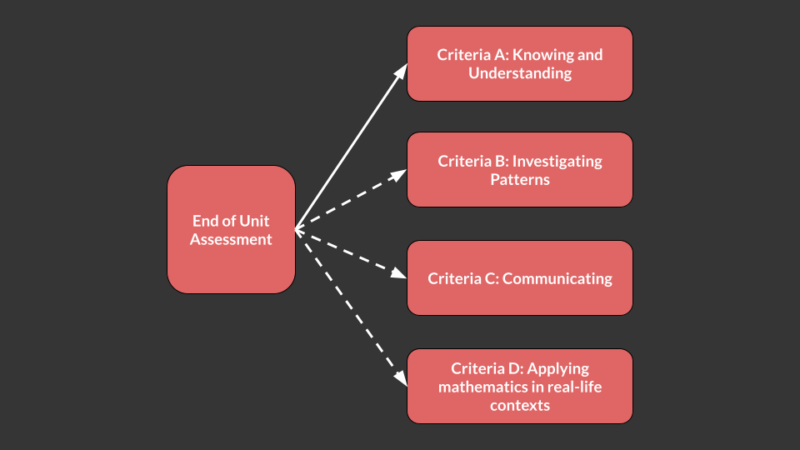
Each unit will contain a Criteria A assessment. I don’t expect teachers to necessarily use all of these, but since there may be some schools which want to use this curriculum but are not MYP schools, it seems like having traditional assessments of knowledge would be helpful for those schools. Further, these help make the knowledge goals for a unit more explicit for teachers, and help with backwards planning of lessons from the end of unit assessments. Criteria B, C, and D assessments are not planned for every unit, but sufficient numbers of each will be included to give MYP teachers choices about which to use.
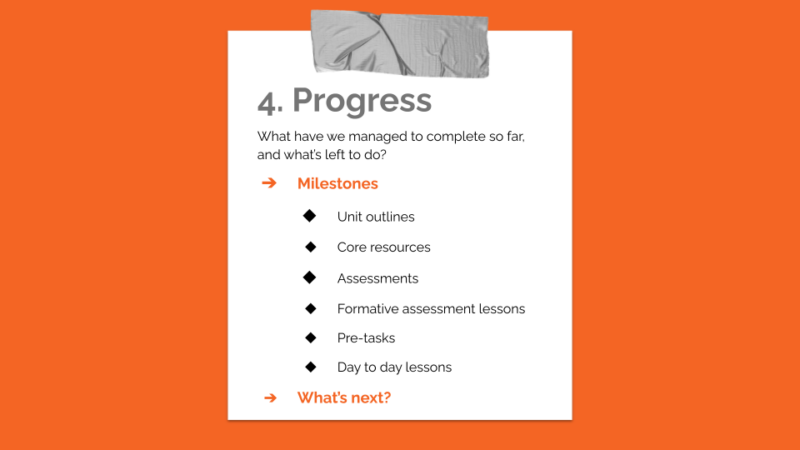
Here is the progress I’ve made so far.
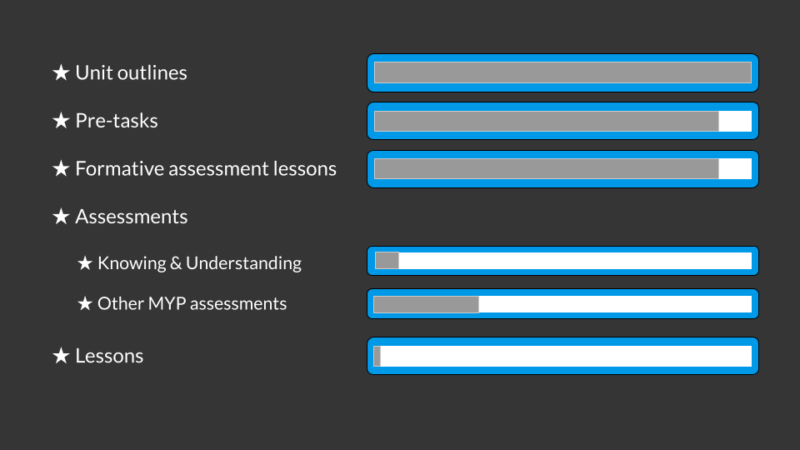
I have constructed each of the units, written big ideas for each, and broken these big ideas into daily lesson targets. I have selected pre-tasks and formative assessment lessons out of the mathematics assessment project for every unit, with some exceptions where no appropriate pre-task or FA lesson exists. I’ll have to write those myself. I’ve written all of the Criteria A assessments for Year 1 of the curriculum, and started writing lessons for Year 1. I have also managed to rope a few people into working on this curriculum, and they have started adding their own lessons into the curriculum, here or there.
What I imagine is that there are schools and teams of math teachers out there who are working in their own silos, constructing curriculum for their students, and who might benefit from working on a larger project. There may be some people who are currently unemployed or working part-time who might want to improve their curriculum writing skills. There may be people out there who are just super passionate about curriculum construction who want to support the project. Maybe there is even an organization that is passionate about supporting creative commons curriculum construction that would like to help fund this work!
If you find yourself in one of the categories above or know of someone who might be interested, please share this post with them and ask them to get in touch with me. This project will only get better the more involvement there is from our math community!